Crochet Pattern Softy Bunny Toy PDF: A Strategic Guide to Precision Crafting
The Crochet Pattern Softy Bunny Toy PDF represents more than a simple set of instructions for a handmade plush; it is a structured blueprint designed to minimize error and maximize creative output. For the modern creator, entrepreneur, or hobbyist seeking high-quality results without the ambiguity often found in free-form crafting tutorials, this digital resource offers a distinct advantage. By providing step-by-step written instructions accompanied by photographic documentation and a comprehensive video guide lasting 1 hour and 58 minutes, the pattern eliminates the guesswork that frequently leads to wasted materials and frustration.
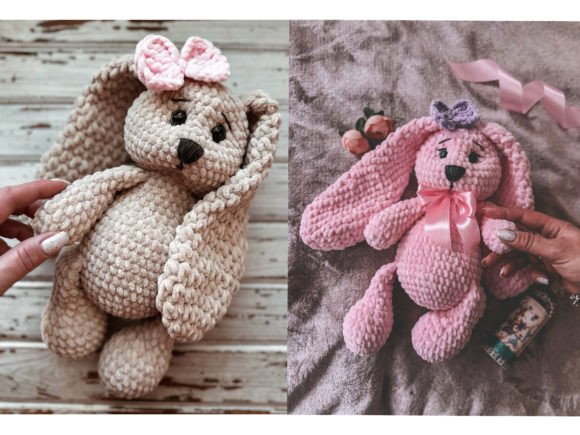
Strategic planning in any craft project begins with clarity. This pattern is explicitly designed for beginners who wish to produce a professional-grade finished product measuring 12 inches in height with ears extending 11 inches. The inclusion of specific gauge requirements—16 stitches and 13 rows per 4x4 inches—ensures that the final dimensions align precisely with the designer's vision. When you approach the Crochet Pattern Softy Bunny Toy PDF with an intent to understand the process rather than just the outcome, you transform a simple hobby into a disciplined practice of execution.
Defining the Scope: Materials and Technical Requirements
Successful project management, whether in business or craft, relies heavily on resource allocation. Before engaging with the Crochet Pattern Softy Bunny Toy PDF, one must rigorously assess the necessary inputs. The pattern specifies the use of plush or velvet yarn, requiring approximately 130 yards (120m) per skein, with two skeins totaling 100 grams each recommended for the project. In the provided example, Baby Love plush yarn in peach color was utilized with 4 mm and 6 mm hooks. This variation in hook size is critical; using the correct tool for the specific yarn weight directly impacts the texture and structural integrity of the toy.
The technical specifications extend beyond yarn selection. To execute this pattern effectively, the crafter must possess proficiency in specific foundational techniques. The instructions are delivered in US English and cover essential stitches including MR (magic ring), CH (chain stitch), SlSt (slip stitch), SC (single crochet), and HDC (half double crochet). More advanced users will also encounter DTR (double treble crochet), which adds unique textural elements to the design. Furthermore, the pattern details complex shaping techniques such as Inc (increasing two SC or two HDC in one stitch) and Dec (decreasing two SC or two HDC together).
Essential Toolkit Checklist:
- Yarn: Any plush or velvet yarn (130 yards/100g required).
- Hooks: 4 mm and 6 mm crochet hooks.
- Hardware: Safety eyes (15 mm diameter).
- Filling: Soft stuffing material.
- Detailing: Embroidery yarn for the muzzle and a plastic needle with a large eyelet.
- Markers: Three pieces to track rounds.
- Tools: Scissors for trimming.
Integrating Multimedia Learning for Skill Acquisition
In an era where visual learning is paramount, the Crochet Pattern Softy Bunny Toy PDF distinguishes itself by integrating a video tutorial of significant length and detail. While written patterns provide the logical framework, the accompanying video serves as the practical demonstration. This hybrid approach supports different learning styles, ensuring that the user can visualize the tension, hand placement, and rhythm required for each row. The 1 hour and 58-minute duration suggests a thorough walkthrough, likely covering setup, assembly, and finishing touches, allowing the learner to pause, rewind, and review complex sections at their own pace.
This multi-modal instruction set reduces the cognitive load associated with interpreting abstract diagrams. For professionals accustomed to detailed documentation, this level of clarity ensures that the "how" is as well-defined as the "what." It allows the maker to focus on the quality of the stitch rather than struggling to decipher the next step. The strategic value here lies in efficiency; by reducing the time spent on troubleshooting errors, the creator can allocate more energy to refining the aesthetic details, such as the embroidery of the muzzle or the even distribution of the stuffing.
Operational Considerations and Risk Management
Approaching the creation of the Softy Bunny requires an understanding of potential pitfalls. Even with a beginner-friendly designation, the complexity of shaping a three-dimensional object from flat stitches introduces variables. One primary risk involves gauge inconsistency. If the stitches are too loose, the 12-inch target may be exceeded, resulting in a floppy structure that lacks character. Conversely, if the tension is too tight, the fabric may become rigid, making it difficult to stuff evenly or attach the safety eyes securely.
To mitigate these risks, the pattern's explicit gauge requirement of 16 stitches and 13 rows over 4x4 inches should not be treated as a suggestion but as a mandatory checkpoint. Before commencing the main body of the bunny, creating a swatch is a prudent decision. This small-scale test validates the yarn-hook combination and confirms that the tension matches the pattern's expectations. Ignoring this step can lead to a situation where the final product deviates significantly from the intended size, rendering the project unsuitable for its purpose, whether that is gifting, selling, or display.
Another area requiring careful attention is the integration of safety components. The use of 15 mm safety eyes demands precision during the assembly phase. The instructions must be followed sequentially to ensure that the eyes are positioned correctly relative to the head's curvature. Misalignment at this stage is difficult to rectify once the stuffing is inserted. The inclusion of a plastic needle with a large eyelet in the materials list further emphasizes the need for durability and ease of threading when working with thicker plush yarns, preventing fraying and ensuring clean seams.
Strategic Application for Creators and Entrepreneurs
For those viewing this project through a commercial lens, the Crochet Pattern Softy Bunny Toy PDF offers a viable path to product development. The standardized nature of the pattern means that every unit produced will adhere to the same high-quality standards, a crucial factor for branding and customer satisfaction. Consistency in sizing and finish builds trust with consumers. Whether used for a small Etsy shop, a charity fundraiser, or a corporate gift program, the reproducibility of the design ensures operational scalability.
The pattern also serves as an educational tool for skill-building. For educators or mentors, providing this structured resource allows students to achieve tangible success quickly. The clear delineation of rows and the availability of video support create a low barrier to entry while maintaining a high ceiling for craftsmanship. This balance encourages retention and fosters a deeper appreciation for the art of crochet.
However, reliance on a single pattern without understanding the underlying principles can limit future growth. It is advisable to study the logic behind the increases and decreases described in the instructions. Understanding why the stitch count changes at specific intervals empowers the maker to modify the pattern later—perhaps altering the ear length or changing the color palette—without compromising the structural integrity of the toy. This adaptability transforms the user from a passive follower of instructions into an active designer capable of innovation.
Maximizing Value Through Intentional Execution
The ultimate goal of utilizing the Crochet Pattern Softy Bunny Toy PDF is to achieve a result that reflects both technical competence and artistic intention. This requires a deliberate approach to the workflow. Start by organizing the workspace with all materials within reach to maintain momentum. Use the marker pieces strategically to track the beginning of each round, preventing confusion in the repetitive nature of circular crochet. Take time to inspect the work after every few rows, checking for symmetry and tension consistency.
When assembling the toy, refer to the video guide to observe how the creator handles the transition between sections. Pay close attention to how the stuffing is applied; it should be firm enough to hold the shape but soft enough to remain huggable. The final touch, the embroidered muzzle, adds personality and should be executed with care to ensure the facial features appear balanced and expressive.
In conclusion, the Crochet Pattern Softy Bunny Toy PDF is a robust resource that bridges the gap between novice aspiration and expert execution. By adhering to the specified materials, respecting the gauge requirements, and leveraging the comprehensive multimedia instructions, creators can produce a high-quality plush toy that meets rigorous standards. Whether for personal fulfillment or professional application, this pattern provides the foundation for a successful project, proving that thoughtful preparation and precise execution yield superior outcomes.